The Aeon Moon
edition

How the
Moon began
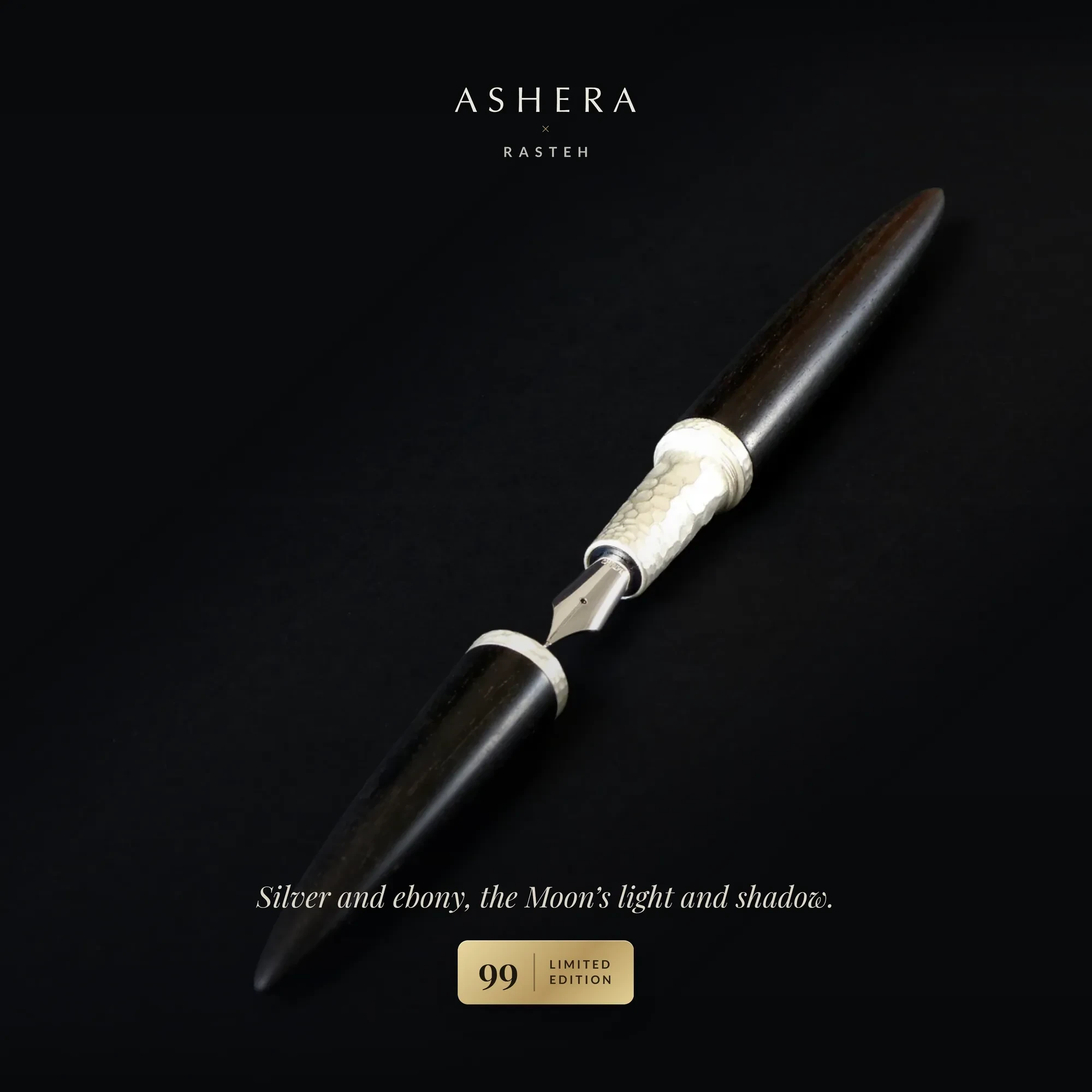
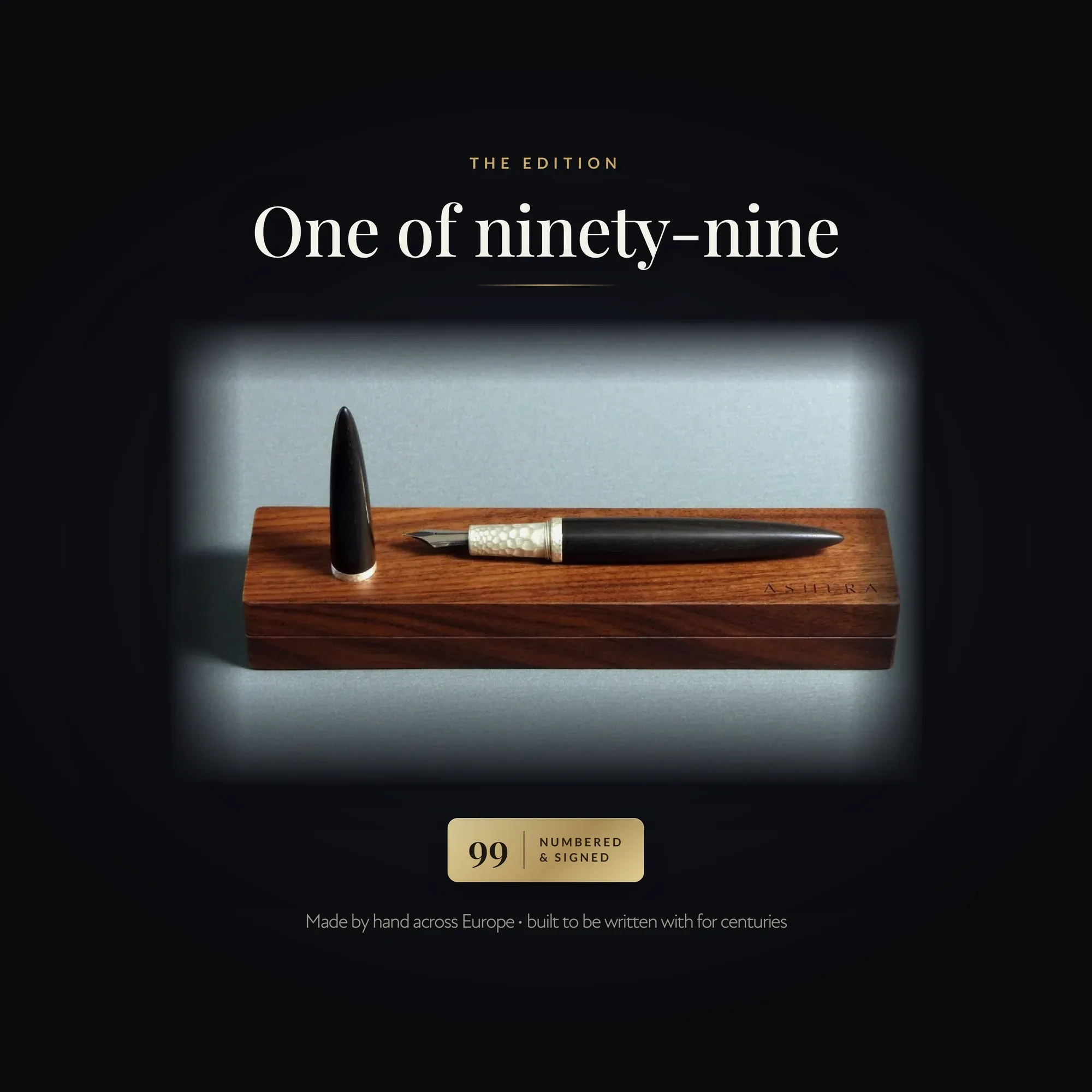
It began with a request. James Rasteh, a fountain pen collector and patron of ours, came to us with an idea: a fountain pen that carried the face of the Moon. He had already commissioned his first Aeon, and this one would be rarer still. We made it with him by hand, over eight months of prototypes, experiments and design. So much went into it that we chose to make it available to others, as a numbered edition of ninety-nine: the Aeon Moon, Rasteh Edition.
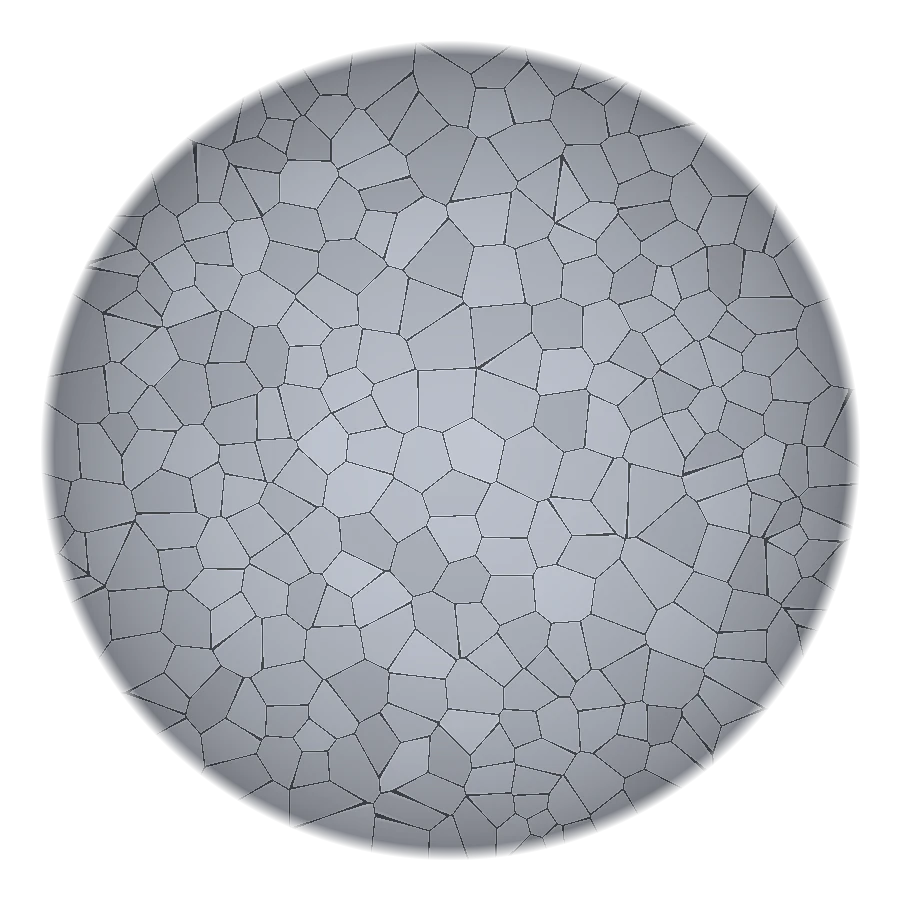
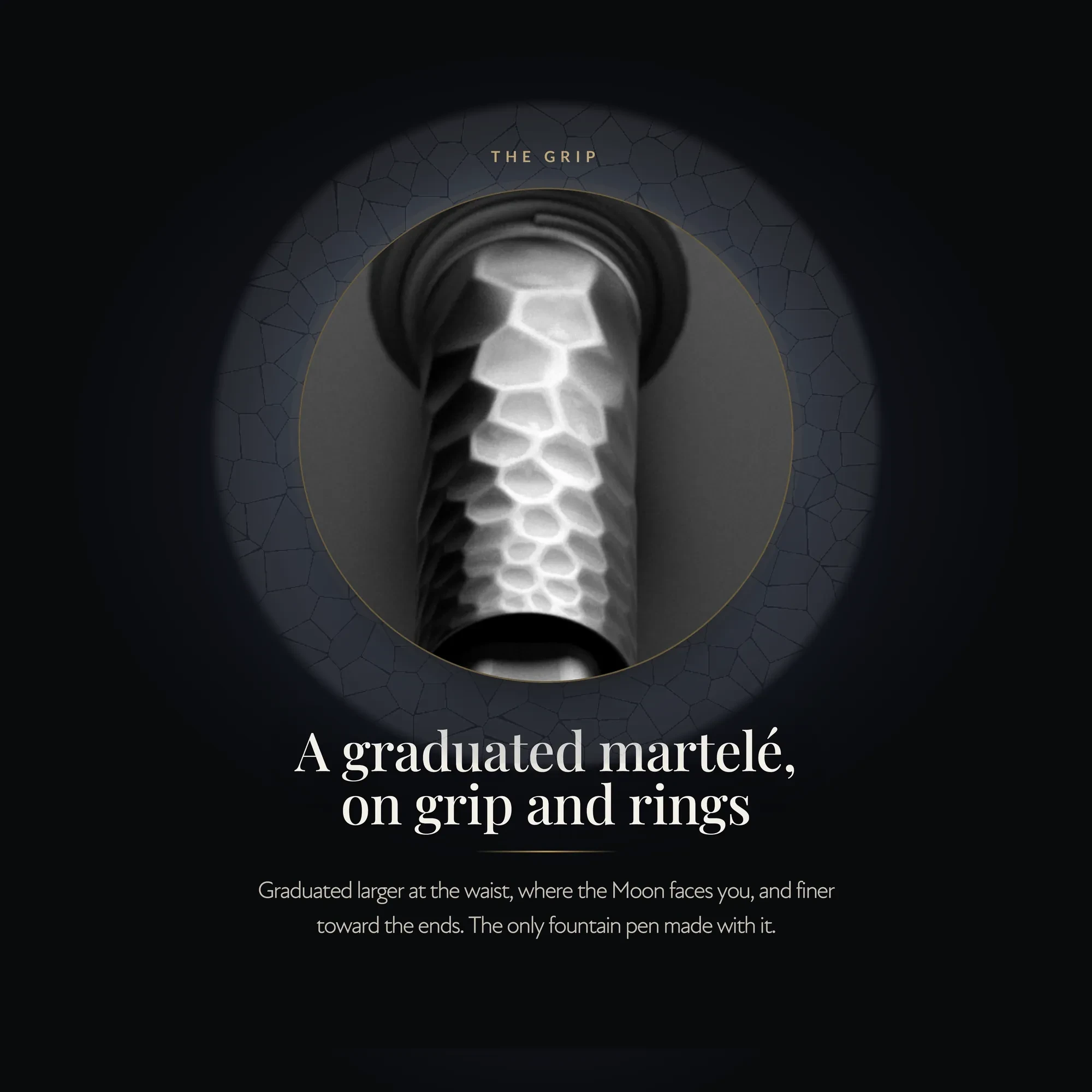
The grip’s surface comes from a modified Voronoi tessellation: cells left irregular, the way craters are, yet close in size so the whole stays calm. It is graduated, too, the cells largest at the waist of the pen, where the Moon faces you, and smaller toward the ends, as the curve of a sphere carries them away.
Every pen begins like this, in conversation. Bring us an idea and we will build it with you.

The first map of another world
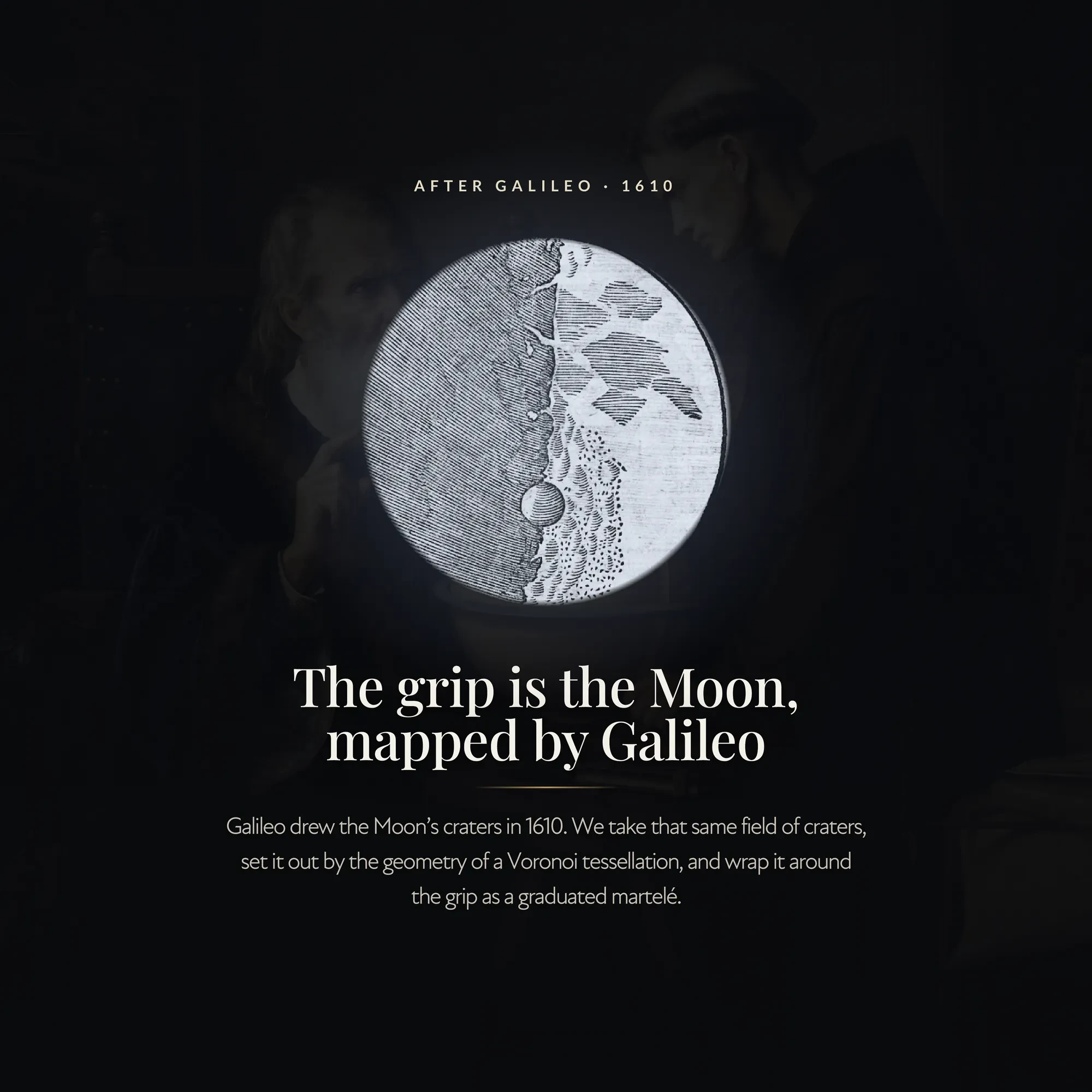
In 1609 Galileo heard of a Dutch invention that made distant things look near, and set out to build a better one. He ground his own lenses, finer than any before, until the instrument could show what no eye ever had: that the Moon was no smooth and perfect sphere, but a world of mountains, valleys and craters. In March 1610 he published the drawings in a slim book, Sidereus Nuncius, the Starry Messenger. It was the first time anyone had shown the Moon as a place, and he saw it through an instrument of wood: a tube he turned by hand to hold the lens he had ground. That lens survives in Florence, framed in ebony. The Aeon Moon is ebony as well, the same material that first brought the Moon close, now shaped to carry it in the hand.


The two ends of light
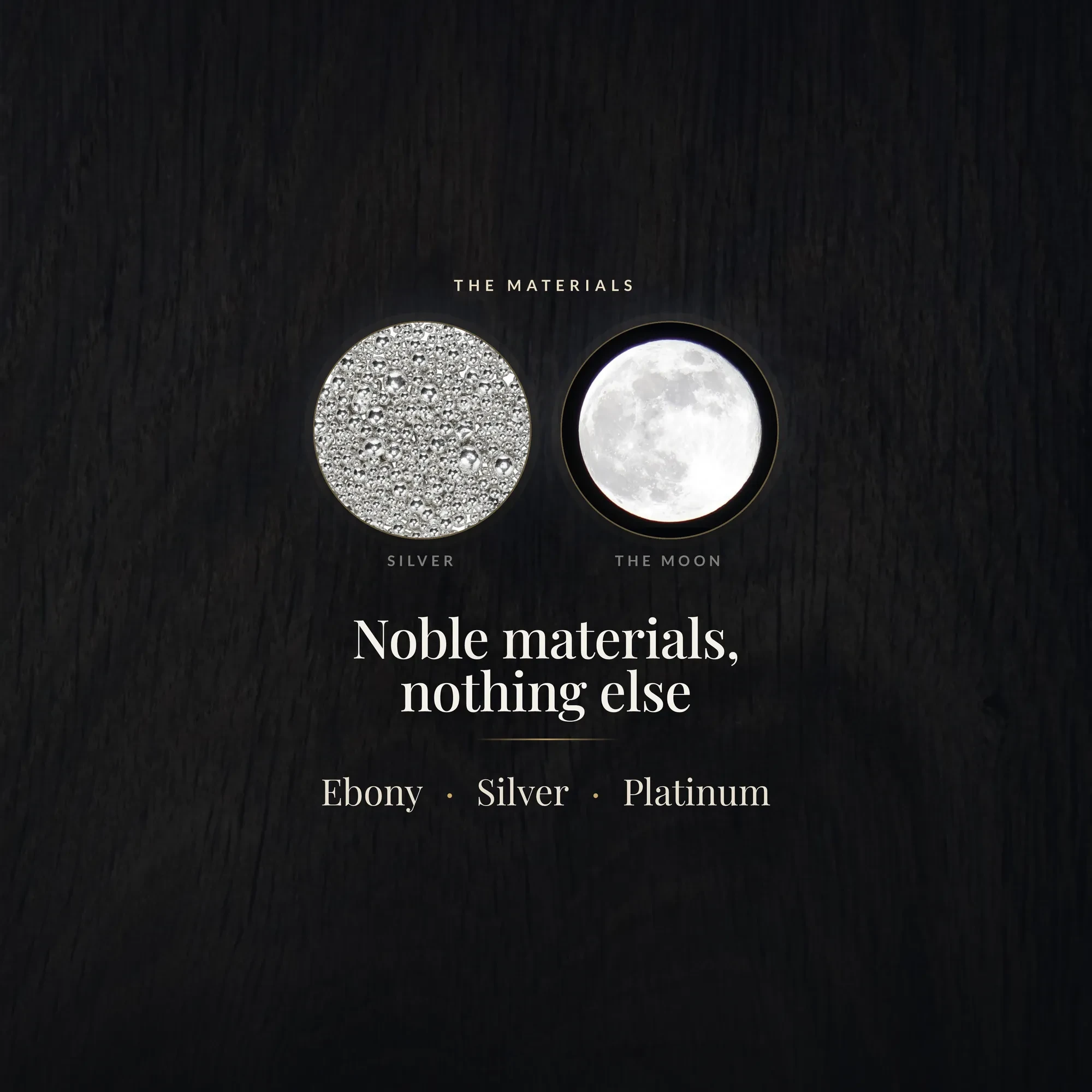
The pen is made from the two ends of light. Ebony is the deepest black the natural world gives a maker; silver is the most reflective metal there is, returning almost every ray that meets it. One takes the light in, the other gives it back: night, and the moonlight on it, held in a single hand.
The black heartwood of Diospyros, dense enough to sink in water and fine enough to take a mirror polish. Its name has carried almost unbroken for three thousand years, from the Egyptian hbny to the Greek ebenos to our own, and it is the wood that gave French its word for a master cabinetmaker, the ébéniste.
The most reflective metal there is. The astronomers of old gave it to the Moon and drew it as a crescent for its sign, and the physics bears them out, for the Moon shines by reflection alone. Monday is still its day, in Lunes, in Lundi, in Lunedì.
Ebony is now protected under CITES, and rightly so. We buy none of it new. Every Aeon Moon is turned from a single block our family has kept for decades, and we would ask you never to buy new ebony from a source you cannot trust. What little of it remains is worth more standing than cut.


Struck by hand, for centuries
Long before machines, silversmiths raised vessels from a single flat sheet with a hammer. Each blow left a small facet, and the facets together caught the light from a hundred angles at once. Because the work was done by hand, no two surfaces were ever alike. The French gave it a name: martelé, simply “hammered.”
Hammered this way, silver becomes the nearest thing a hand can make to the face of the Moon: a field of small craters that scatters light from every angle at once. There is a geometry hidden in it, too. Each blow falls as a point, and where the blows meet they close into edges and cells, the pattern a mathematician would call a tessellation. The Aeon Moon begins there, and rather than leave the pattern to chance, draws it exactly, still by hand.
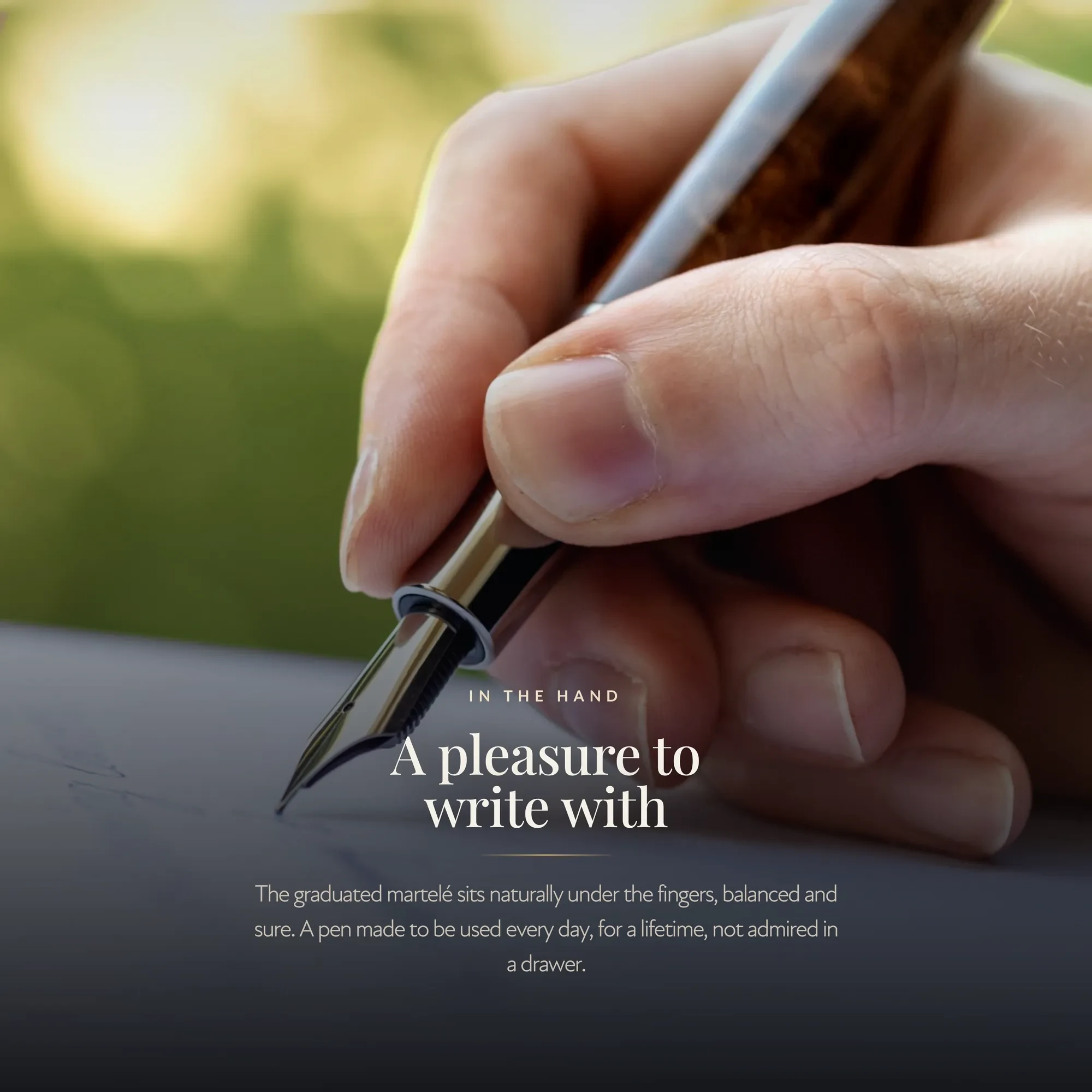
The Aeon Moon is the only pen with a graduated martelé on the grip and rings, which makes it very natural and pleasant to write with.
The geometry nature draws
A Voronoi tessellation divides a surface into cells, each one the territory of a single point: every place belongs to the seed nearest to it. It is the pattern of a giraffe’s coat and a dragonfly’s wing, of the cells in a leaf, of cracked earth and the honeycomb, the shape that turns up wherever life spreads from scattered points until the edges meet.
We chose it for the grip because it is the Moon’s own logic: cells irregular, like craters, yet close enough in size that the surface stays even and comfortable in the hand, and graduated to the curve of the pen. This is the work we care about most, finding the mathematics inside beautiful things and letting it show, in the grain of a burl as much as the face of the Moon.


A Ukrainian mathematician who, with Minkowski, founded the geometry of numbers. He set the tessellation down in his final paper of 1908, having turned the idea over for years until it reached, in his words, its perfect form.
The Rasteh Edition nib
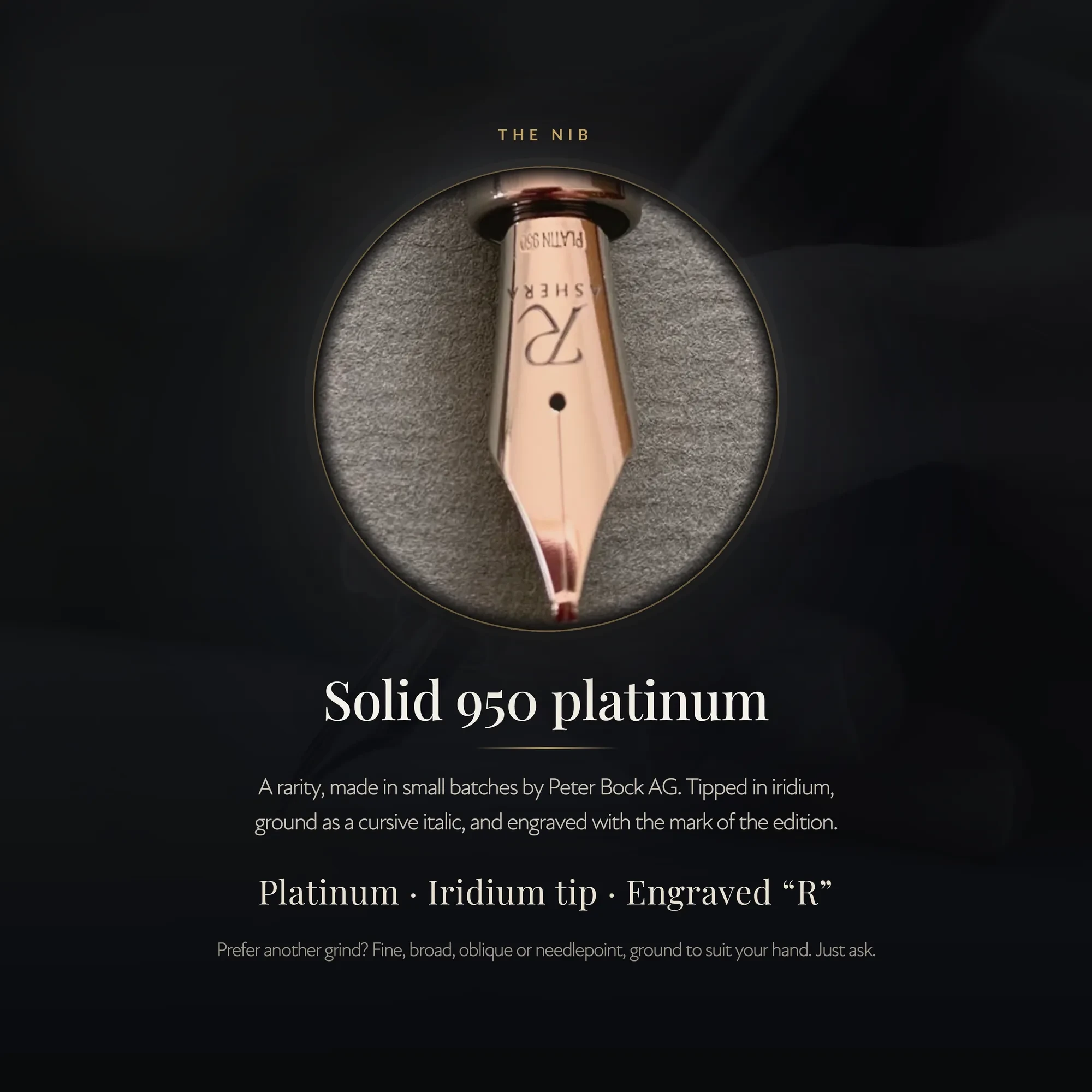
A solid 950 platinum nib, a rarity, made in small batches by Peter Bock AG. It is ground as a calligraphy nib, for the strong line variation James Rasteh writes with: broad on the downstroke, fine across.
Unlike a plain italic, which writes on bare metal, its tip is iridium, the hard, low-friction alloy introduced to glide against the paper. Its edges are rounded a touch, so it holds that line variation without catching if the hand wanders. A more forgiving nib, and a more comfortable one.
Prefer another? We grind any nib there is: fine, broad, oblique, needlepoint. Tell us which suits your hand.


Made by hand, across Europe
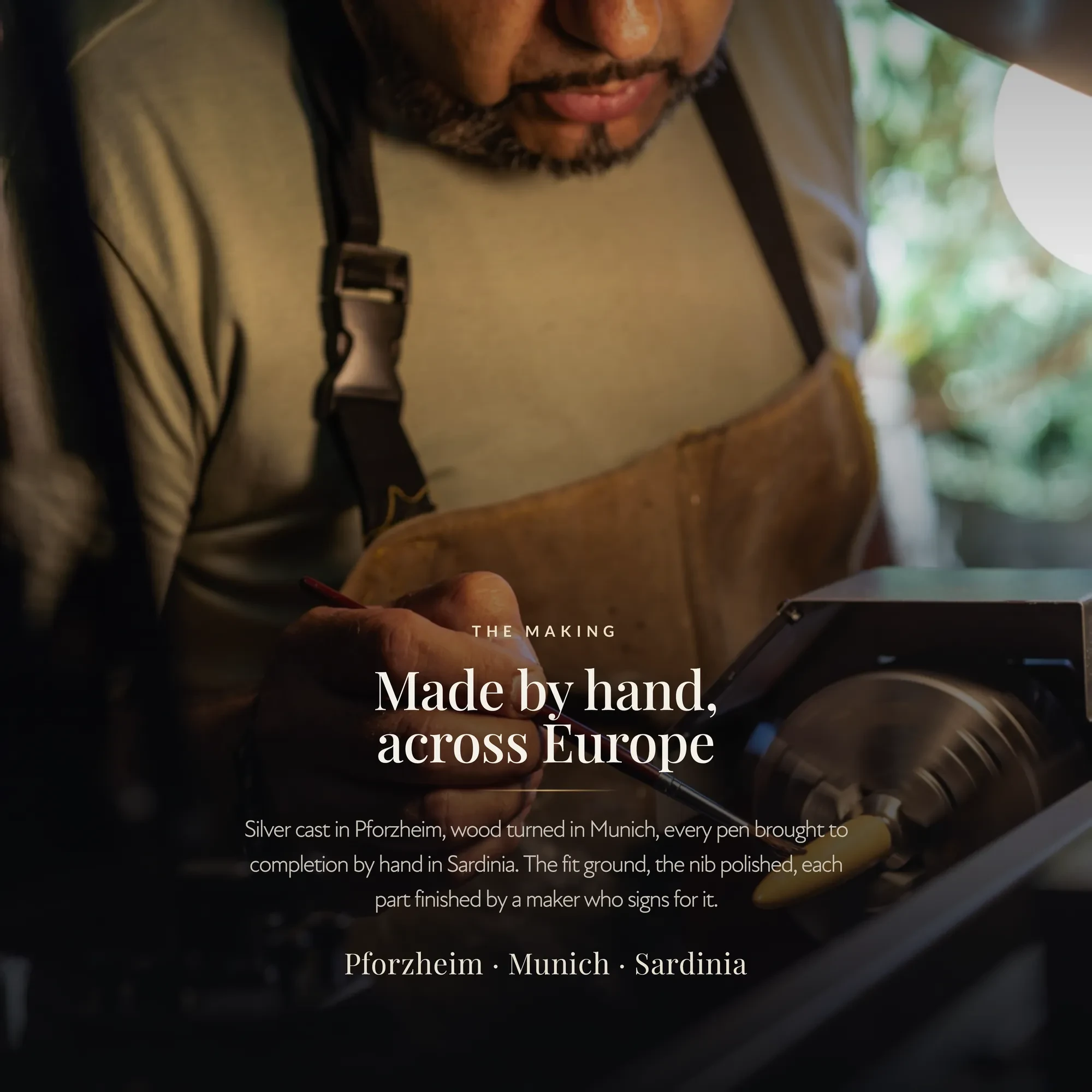
The silver grip is cast in Pforzheim, the old German city of goldsmiths, and finished by hand. The wood is turned in Munich by Bernhard, and Tore grinds each part to its precise fit. In Sardinia, Claudia brings every pen to completion: final assembly, alignment, finishing, quality control and shipping. Our founder, Marius Visser, polishes every nib by hand.

A hundred trees, for every pen
We are artists before we are makers, and much of why we do this is the natural world the work comes from. Its grain, its patterns, its quiet order are the things we set out to show.
So for every Aeon Moon, we plant a hundred trees with our partner Ecologi, and the woods we use are sustainable. What the pen takes from the world, it gives back, many times over.
One of ninety-nine
Black ebony and cast silver, with a grip drawn from the face of the Moon. Even the threads are turned in solid silver, so nothing on it wears with use. Each pen is numbered, made by hand, and built to be written with for centuries.
The Aeon Moon is made entirely from noble and precious materials: ebony, silver and platinum.